A well-built Shopify store, carefully shot photos, a product page that tells a story, a smooth checkout. Then the customer receives a plain gray box, taped shut in a hurry, with the product floating around in bubble wrap and a crooked packing slip. The gap between the promise made online and what the person is holding in their hands is instantly obvious. The consequences are very visible too: few spontaneous reviews, no shared photos, a repeat purchase rate that never takes off, and returns that are sometimes driven by nothing more than a feeling of letdown. Ecommerce packaging isn't a logistics detail, it's the final chapter of your sales page.
The parcel is the only physical moment your brand gets
In a store, a customer can touch, smell, compare. Online, everything happens through a screen until delivery day. On that day, for about thirty seconds, your brand becomes a real object. It's the only moment when it appeals to something other than sight: the weight of the parcel, the sound of the paper, the sturdiness of the cardboard, the faint smell of ink or of the product itself.
That moment carries value far out of proportion to its cost. It comes right after the wait, so attention is at its peak. And it lands at the exact point where the customer is wondering, consciously or not, whether buying was the right call. A thoughtful unboxing answers that question before the product has even left the box.
The reverse is just as powerful. A customer who paid a premium price and opens visibly cheap packaging will mentally downgrade the product. They probably won't say the packaging disappointed them, they'll say the product wasn't worth the price. You'll get a return or a lukewarm review and never identify the real cause.
The direct link with your prices
If you sell above the average for your category, packaging is part of the justification. You don't sell a high-priced artisan soap in a clear plastic bag. Consistency between the language of the product page and the materials in the parcel is what makes your positioning credible. It's exactly the same logic as structuring a product page that justifies the price, simply extended beyond the site.
What packaging really changes for your revenue
We need to move past the purely aesthetic argument. Thoughtful packaging works on four concrete economic mechanisms.
Repeat orders. A customer happy with the product may buy again. A customer who enjoyed the unboxing remembers the brand name. The difference comes down to recall, not raw satisfaction.
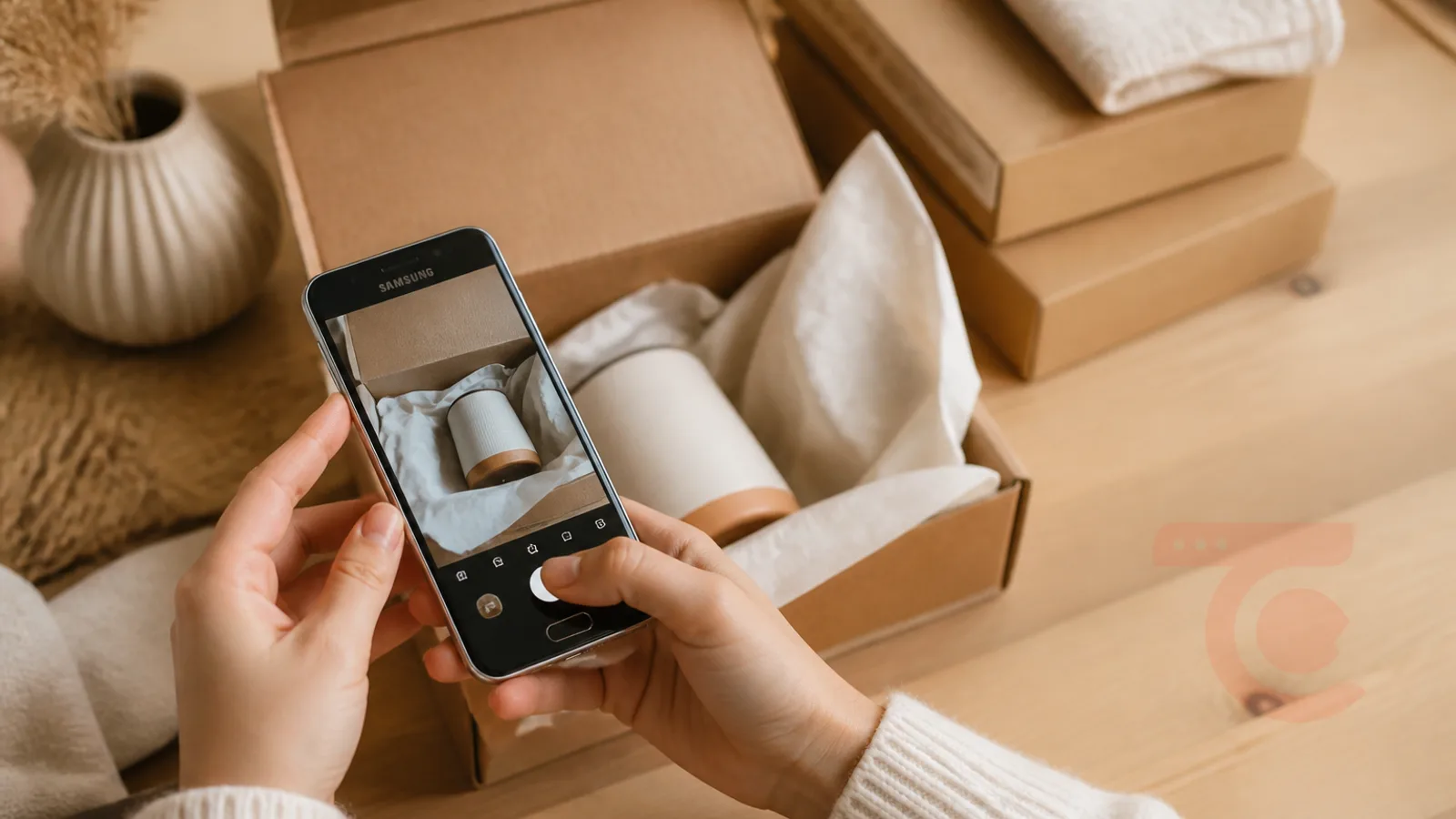
Free content. The photos and videos customers post don't come from an ordinary product pulled out of a kraft bag. They come from a presentation worth framing. That content then feeds your pages, your social channels and your credibility, and it drives word of mouth far better than an automated follow-up.
Reviews. A parcel containing a signed card, with a simple ask and a QR code, gets more responses than a follow-up email buried in an inbox. Physical media still has a pull that email has lost.
Returns. A well-cushioned product arrives intact. Packaging that opens and closes easily reduces friction for legitimate returns and cuts down on disputes about the condition of the parcel on arrival.
Building consistent packaging without blowing the budget
The mirror image of neglected packaging is lavish packaging that destroys your margin. A custom rigid box on an order with a low average cart makes no sense. The goal isn't luxury, it's consistency.
Here's what to review before ordering anything:
- Your actual average cart. Set a packaging budget per order that you agree never to exceed, and think in terms of a share of that cart, not in terms of what you fall in love with.
- How fragile the product is. Protection comes before beauty. A broken product cancels out everything else.
- Weight and volume. Every unnecessary centimeter costs you in shipping, order after order. Oversized packaging costs you twice: in materials and in postage.
- How many items you need to pack. If you sell twenty products in different sizes, aim for two or three standard formats instead of one package per item.
- Storage. An order of custom boxes often arrives in bulk. Make sure you have the space before you sign.
- Prep time. A packing ritual that takes several minutes per order is workable at low volume and impossible after that. Time yourself.
- Visual continuity. Color, typography, logo: the packaging should be recognizable as coming from the same house as the site. It's the natural extension of a consistent brand identity online.
- The environmental angle. If your brand talks about sustainability, layers of plastic packaging will undercut you instantly.
One thing that's often underestimated: the cheapest elements are sometimes the most memorable. A rubber stamp of your logo on plain kraft cardboard, printed tape, tissue paper in a well-chosen color, a postcard-sized note. Together they cost very little and create an immediate impression of care.
The outer box counts too
Plenty of brands fuss over the inside and forget the outside. Yet the first visual contact is the parcel on the doorstep. A custom sticker or a clean label is enough to build anticipation before opening. And it reduces the risk of the customer mistaking your shipment for an order placed somewhere else.
Showing the unboxing on your Shopify store
This is the step almost nobody takes. You've invested in thoughtful packaging, and it stays invisible until delivery day. You may as well show it before purchase, because it reassures and because it sets you apart.
A few placements that work well on Shopify:
In the product gallery. Add one or two images of the packaged product at the end of the gallery. They answer a question many people have without putting it into words: what is the thing I'm about to receive going to look like?
On your shipping page. Instead of a dry terms page, show the parcel, explain how you protect the product and how quickly you prepare orders. This page is often viewed right before payment, and it clears up a good share of last-minute hesitation.
On your about page. A photo of your packing table says more than a paragraph about your values.
In confirmation and shipping emails. These are the most-opened messages in the entire funnel. An image of the parcel keeps the anticipation alive.
As a dedicated section on your homepage. A short band, two or three visuals, one sentence. Be careful not to weigh the page down: text and image need to stay balanced, or the page loses readability.
One technical precaution: packaging photos are usually rich in detail and therefore heavy. Compress them and serve them in the right formats, otherwise you gain in desirability what you lose in loading speed. On a custom-built Shopify store, this is planned for as soon as the theme is built.
What goes inside the box: the insert that works for you
The small slip included with the order is the cheapest and most-read piece of advertising in your business. It arrives in a favorable context, it isn't filtered, and you don't pay per click. And yet most stores settle for the packing slip printed by the carrier.
A few uses that hold up:
A short thank-you note, written the way a human actually speaks, with a first name. Not a corporate paragraph. Three lines is plenty.
Instructions or a usage tip. For a cosmetic, textile or food product, a care or storage tip prevents nasty surprises and therefore negative reviews caused by misuse.
An invitation to leave a review, with a QR code that goes straight to the right page. The shorter the path, the higher the response rate.
A discount code for the next order, with an end date. It's the simplest way to turn a first purchase into a repeat customer, especially if you pair it with a gift set or bundle offer.
One caution: don't pile everything on. Three messages in one parcel amounts to no message at all. Pick the main goal of your insert and stick with it for a few months before changing it.
Test before rolling it out
Before ordering five thousand custom boxes, run a real-world test. Prepare five parcels exactly as if they were going out, ship them to yourself and to a few friends in different cities, then open them with no special care, the way anyone would.
Observe: is the box damaged on arrival? Is opening it intuitive, or does it take a box cutter and patience? Did the product stay in place? Did the insert fall on the floor without being noticed? Does the parcel fit in a standard mailbox, or does it force a trip to a pickup point?
This test takes a week and saves you months of expensive mistakes. It follows the same verification logic described for testing a Shopify store before launch: you validate reality, not intent.
Film an unboxing yourself too, in natural light, with a fixed camera. If the video is boring to watch, no customer will make one either. If it makes you want the product, you've got both a design benchmark and content you can reuse on your product pages.
Conclusion
Packaging is one of the few ecommerce investments whose effect shows up without any analytics tool: customers talk about it, or they don't. Start small, with inexpensive elements that match your identity, test on a limited volume, then show the result on your store. Thoughtful packaging that nobody sees before buying is only doing half its job.
And if your site doesn't yet convey that same sense of care from the very first page, the problem sits upstream of the box. A store built cleanly, fast, readable and true to your brand creates the consistency that the parcel then confirms. If you'd like to see what that work looks like on real projects, take a look at our recent ones.