
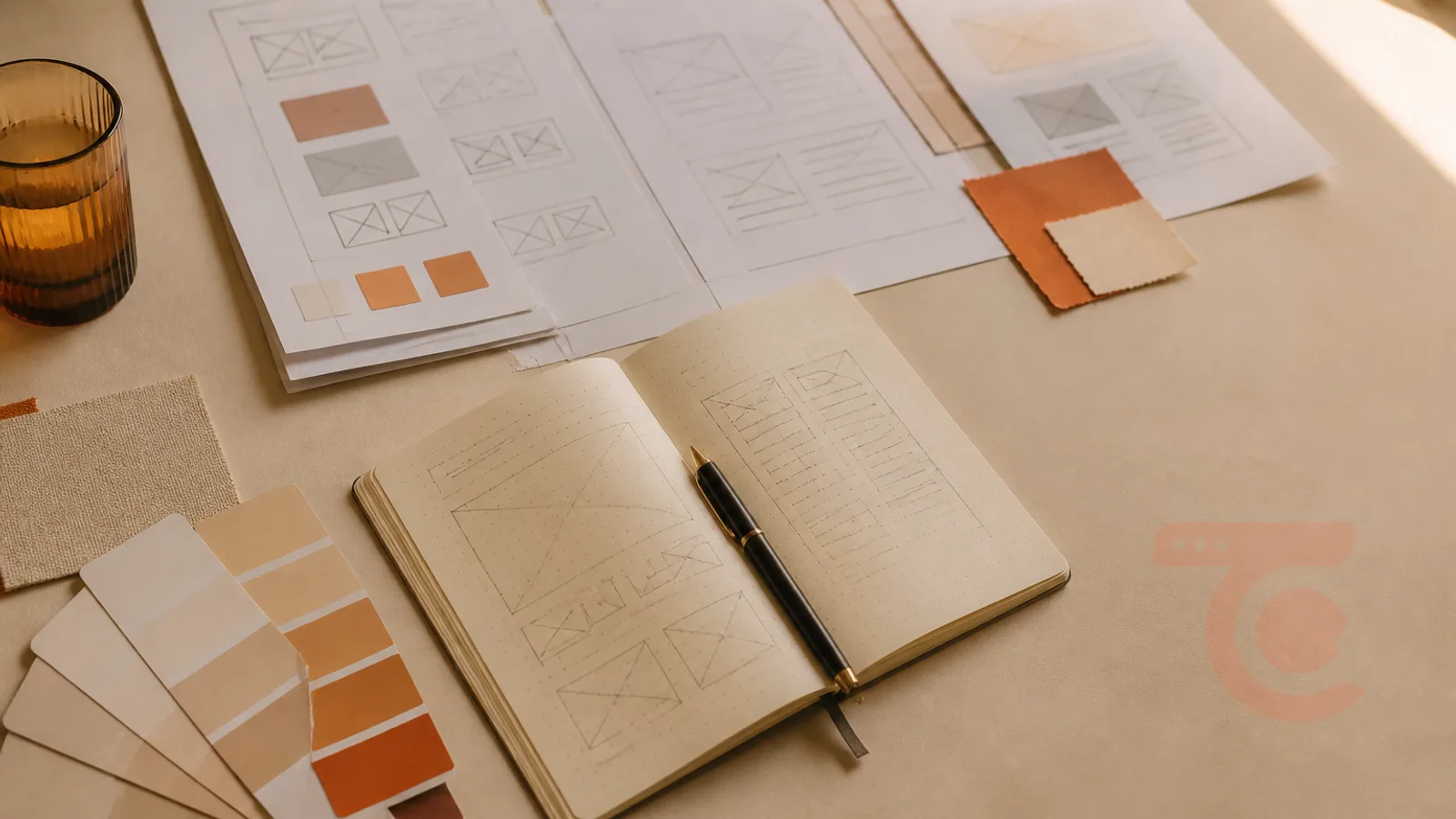
Rebuilding a website from the ground up is often a daunting prospect, and that fear is partly justified: a site, even an imperfect one, may already be bringing in visits, some search visibility, and a certain familiarity for your regular customers. The idea of starting again from scratch raises the fear of losing what, despite all its obvious flaws, still quietly does its job day after day. Yet a well-run redesign doesn't need to break everything overnight. On the contrary, it can build intelligently on what already exists to gradually create something noticeably better.
Start with an honest audit of what you already have
Before thinking about what the new site will be, you first need to understand exactly what the current site does, or doesn't do. Which pages actually get visits, which ones are ignored, which content keeps drawing traffic from Google despite its age, and which elements, on the other hand, stopped serving any purpose a long time ago. This honest audit keeps you from rebuilding mistakes that were already there, or worse, from accidentally deleting something that was working quietly but effectively.
The audit should also look at what current visitors really think of the site, when that information is available: feedback received by email, comments made over the phone, or simply your own experience of using the site the way a customer would. These signals, often informal, offer valuable insights that traffic figures alone don't always reveal.
This groundwork takes time, but it's time that pays for itself many times over: a redesign built on a clear understanding of the existing site generally moves faster and with less hesitation than one that dives straight in, without that initial step back.
The initial audit also helps you resist a common temptation: judging your own site purely on its looks, while forgetting what it actually produces in terms of visits and inquiries. A site that looks dated can still generate regular inquiries, while a newer but poorly structured site can, conversely, underperform badly despite its more modern appearance. Only a factual audit can tell these two situations apart, and they are often wrongly confused.
Decide what really needs to change
A redesign doesn't necessarily mean rebuilding everything. Some sites mainly need a new design, while keeping a content structure that already works well. Others need a complete reorganisation of their pages, without the visual identity itself being a particular problem. Mixing up these two needs often leads to oversized redesigns that cost more and take longer than necessary for the problem actually at hand.
Clarifying this scope from the start, by separating what needs to change from what can stay, lets you focus your efforts, and your budget, where they'll have the most real impact. A site that converts poorly despite a pleasant design probably has a structure or messaging problem, not an art direction problem, and a purely cosmetic redesign would do nothing to solve the original issue.
You can see this in our work: the redesigns there are very different from one another, some focused almost entirely on design, others on a complete reorganisation of the content. In each case, the scope was defined upfront, based on the real problem identified rather than a vague wish to "modernize" the site with no specific goal.
Protect what already works, especially your search rankings
One of the biggest and most legitimate concerns in a redesign is the search visibility you've already earned: pages that have ranked properly in search results for years represent real value, and a poorly prepared redesign can wipe that out in a few clicks. Changing a page's address without setting up a redirect, or deleting content that was still attracting visitors, are mistakes that can erase years of accumulated effort, sometimes for a long time.
Planning for this from the preparation phase, by listing every existing page and what will happen to it in the new version of the site, prevents these avoidable losses. Every page that is deleted or moved should come with a clear redirect to its most relevant equivalent in the new structure, rather than simply being abandoned with no continuity for the visitors who were still landing on it.
The same care applies to the text itself: copy that performed well in search shouldn't be rewritten purely for aesthetic reasons, without considering what, in its original wording, actually contributed to its strong ranking.
It's also wise to keep a record of the old site before it disappears, even if only as screenshots or a full backup. This simple precaution lets you quickly find a forgotten piece of information, or understand after the fact why a page behaved a certain way, rather than having to piece those details together from memory once the old site has been permanently replaced.
Involve the right people at the right time
A successful redesign isn't just a technical or design project: it often concerns several people within the business, whose needs aren't always taken into account at the same moment. The sales team, who know customers' objections inside out, or whoever answers the phone, often have a very concrete view of what the current site is missing. It's a valuable perspective, but one that is rarely sought out before a redesign begins.
Involving these people early in the project, rather than at the very end for a quick opinion on the look, lets you feed the redesign with observations straight from the field. It also avoids a common pitfall: a new site designed solely from the point of view of management or the agency, without taking into account the day-to-day feedback received by the people who deal directly with customers.
This consultation doesn't need to slow the project down unduly: a short series of brief conversations, before the design phase, is usually enough to gather the key observations, without turning the redesign into an endless approval process where everyone has to sign off on every stage.
Test before calling the redesign finished
A redesign, like building a site from scratch, deserves to be tested in real-world conditions before it goes live for good: forms, mobile display, the redirects you've set up, loading speed. These checks, sometimes neglected under the pressure of a long-awaited launch, save you from discovering problems after the fact, once the site is already visible to your regular customers.
It's also worth planning an observation period right after launch, to check that traffic and search engine positions are moving as expected, rather than considering the project closed the moment it's published, especially during the very first weeks after the switch. A free preview dedicated to redesigns lets you see a concrete direction upfront, before fully committing to the transformation.
Conclusion
A successful website redesign isn't about rebuilding everything on principle, but about pinpointing exactly what needs to change while carefully protecting what already works. An honest audit of the existing site, a clearly defined scope, close attention to the search rankings you've already earned, and involving the right people at the right time: followed in that order, these steps let you approach a redesign with confidence rather than with the fear of losing everything along the way.